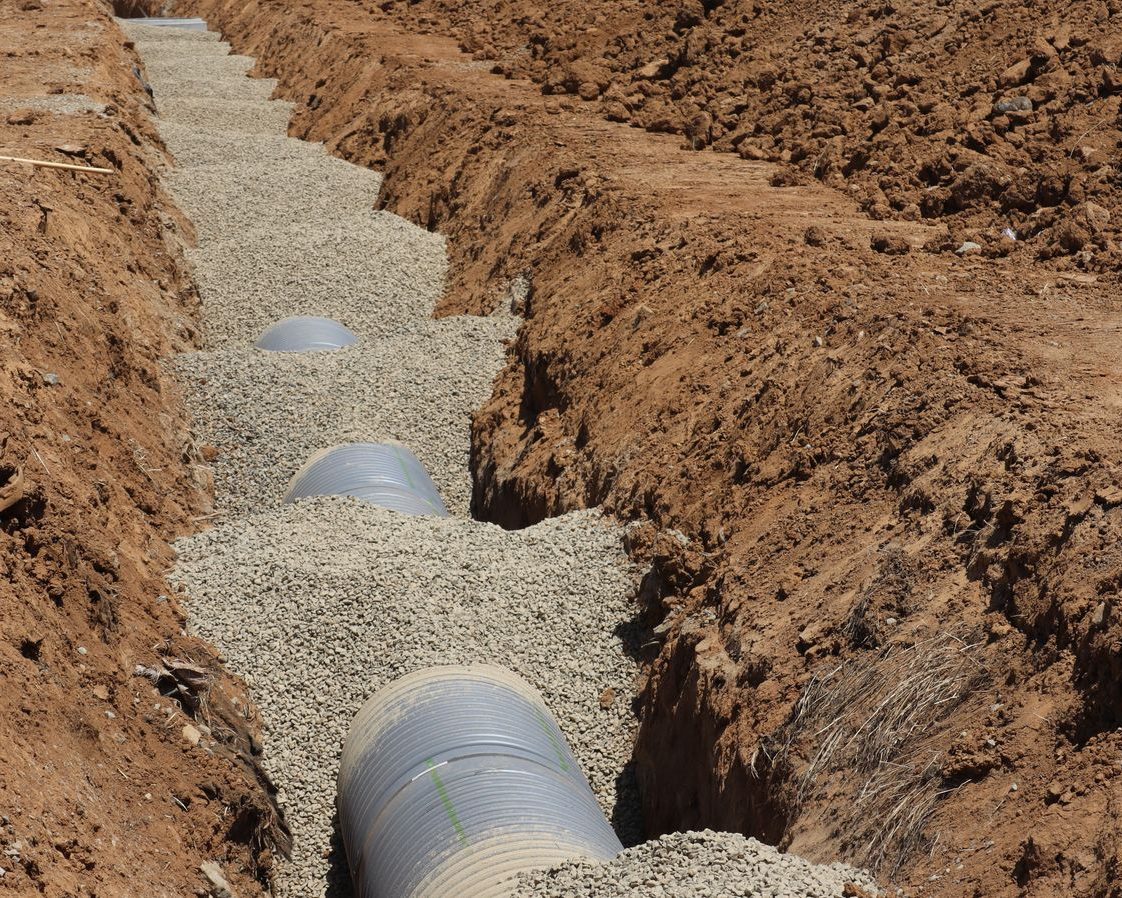
Soggy fields, backed-up lines, crushed pipe, tanks and baffles that gave out, cesspools that failed inspection. We find what's wrong, tell you straight whether it's a repair or a replacement, and get it back in the ground right. Fort Ann, Washington County and the Lake George region.

Most septic failures come down to a short list. We've dug up all of them.
A repair is worth doing when the rest of the system has life left in it. It's a waste when the field is at the end of the road. Here's how we call it.
Small problems get small fixes. Big ones get honest conversations.
Wet spots, smells, backups, what the pumper said. Photos help. If it's an active backup, say so — we'll move.
We find the tank and the field, check the box and the outlet, and figure out what actually failed. Free, and you get a straight answer on the spot.
In Washington County, repairs and replacements to the system go through the same Sewage Disposal Permit as a new install, with a stamped plan. Minor component fixes are quicker. We'll tell you which you're in.
The right part replaced the right way, inspected where required, backfilled and graded so the yard doesn't tell on us later.
Around Lake George, an inspection result comes with a deadline. In 2025 the Park Commission found that more than half of the 320 systems it inspected needed repair or replacement. "Failed" systems get six months; substandard ones get 60 days to five years depending on the finding.
Every new, repaired or replaced system needs a Sewage Disposal Permit from the county Department of Code Enforcement in Fort Edward: a $100 application, plans sealed by a New York State licensed design professional, and two to four weeks of review before anyone digs.
Systems within 500 feet of Lake George (or 100 feet of a protected stream feeding it) are on a mandatory five-year inspection cycle. In 2025 the Commission inspected 320 systems and more than half needed repair or replacement.
The State Septic System Replacement Fund can reimburse up to 50% of an eligible replacement, up to $10,000. Washington County lists Fort Ann, Fort Edward, Kingsbury, Argyle, Hartford, Dresden, Putnam, Easton, Greenwich and White Creek; Warren County runs its own for the Lake George basin.
Sources: Washington County Sewage Disposal System Application (rev. Jan 2026) · Lake George Park Commission 2025 Septic Inspection Program annual report · washingtoncountyny.gov, State Septic System Replacement Fund. Eligibility is decided by the county and the state, not by us — we'll point you to the right form.
Nine times out of ten it's the absorption field: it can't take the water anymore, so effluent surfaces and the house backs up. Have the tank pumped if it hasn't been in years, and if the pumper says it refilled from the outlet, call us — that's the field.
No. We're the excavation side — lines, tanks, boxes and fields. A hauler pumps. If pumping doesn't solve it, we do.
Repairs or replacements to the disposal system do — the county application lists "repair or replacement of an existing disposal system" as permitted work and requires a stamped plan. Replacing a baffle or adding risers is a different scale, and we'll tell you what your fix requires before we start.
Failed systems get six months to come into compliance; substandard ones get a window from 60 days to five years. The design has to go through an engineer and the local review authority first, so the sooner the test pits are dug the better. Call us the week you get the letter.
Sometimes, if the existing field is sound and there's room and soil for more trench. The designer decides that from the test pits. When it works, it's a lot less than a full replacement.
We dig where the problem is. A line repair is a trench, not a field. When it is the field, we plan the route in and out with you so the lawn we don't need to touch stays a lawn.
Free on-site quotes across Fort Ann, Washington County and the Lake George region. Call, text, or send us a few photos of the yard.